How can a startup save costs when ordering custom packaging bags?
Struggling with high packaging costs that strain your budget? These expenses can limit your ability to test new products and grow your brand, making you feel stuck.
The best way to reduce costs on custom stand-up pouches is to choose the right printing method1 for your order size, understand minimum order quantities (MOQs), and simplify your pouch features. Digital printing is often cheaper for small runs, while eliminating non-essential add-ons lowers the per-unit price.
Finding the right balance between creating beautiful packaging and managing costs is a major challenge for many businesses, especially startups. You need packaging that catches the eye of a customer but doesn't drain your bank account. It can feel like you have to choose one or the other. But I'm here to tell you that you don't. I've worked with hundreds of brands, and I've learned the secrets to getting premium packaging on a practical budget. Let's explore these cost-saving strategies so you can make smarter decisions for your business.
How Does Digital Printing Compare to Rotogravure Printing2 for Stand-Up Pouch Cost Optimization?
Confused about which printing method to choose? Picking the wrong one can mean paying massive upfront fees for plates or getting stuck with a high cost for each bag.
Digital printing is your best choice for small runs and many designs because it has zero plate fees. Rotogravure printing becomes much cheaper per pouch but only makes sense for very large orders of a single design, as you first have to pay for expensive printing plates.
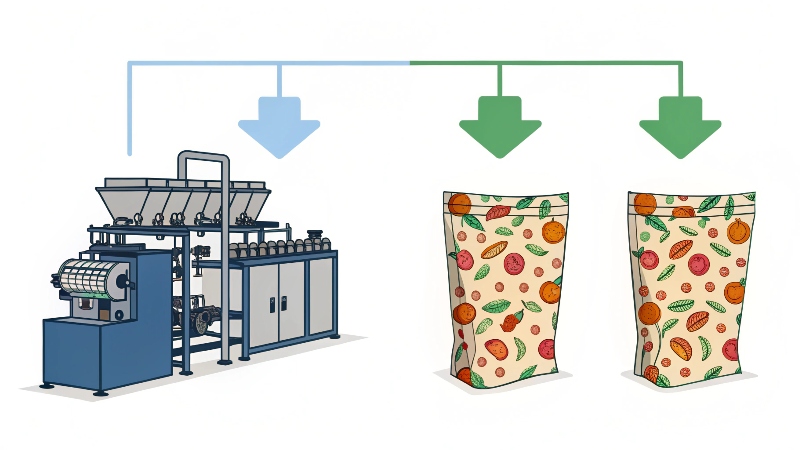
Understanding the core difference between these two methods is the key to saving money. Think of them as two different tools for two different jobs. One is not better than the other, but one is likely better for your specific situation.
-
Rotogravure Printing This is the traditional method for high-volume packaging. It uses engraved metal cylinders, often called plates, for each color in your design. The setup cost is high because creating these plates is expensive. A full set can cost anywhere from $500 to over $1,000. However, once the press is running, the cost per bag becomes very low. This method is perfect for established brands that order hundreds of thousands of bags with the same design.
-
Digital Printing This is a modern technology that works much like your office printer, but on an industrial scale. It prints your design directly onto the packaging material without any plates. This means there are no setup fees. The cost per bag is higher than rotogravure at large volumes, but it's the clear winner for small businesses, new product launches, and brands with many product variations.
Here is a simple comparison to help you decide:
| Feature | Digital Printing | Rotogravure Printing |
|---|---|---|
| Setup Cost | $0 (No plates) | High ($500 - $1,000+ per design) |
| Best For | Small to medium runs, multiple designs, startups | Very large runs (10,000+ pcs), single stable designs |
| Per-Unit Cost | Consistent; cost-effective for small quantities | Very low at high volumes, very high for small volumes |
| Turnaround | Fast | Slower due to plate manufacturing |
I recently worked with a client, let's call her Sarah, who was launching a new line of artisanal candies. She had 20 different flavors and wanted a unique pouch for each. If she chose rotogravure printing, she would have needed 20 sets of plates. At an average of $700 per set, she was looking at an upfront cost of $14,000 before even printing a single bag. That was simply not possible for her startup. We guided her toward digital printing3. She was able to print small batches of all 20 designs with zero plate fees, allowing her to test the market without a huge financial risk. This flexibility was a game-changer for her business.
What Minimum Order Quantities Should You Expect When Ordering Custom Stand-Up Pouches from Chinese Manufacturers?
Are you worried about ordering from a Chinese manufacturer? You might be unsure about minimum order quantities (MOQs) and how they fit your budget.
MOQs depend heavily on the printing method. For digital printing, we at Sorbar offer no MOQ, so you can order as few as one bag. For rotogravure printing, the industry standard MOQ is typically between 10,000 and 100,000 pieces per design to make the setup costs worthwhile.
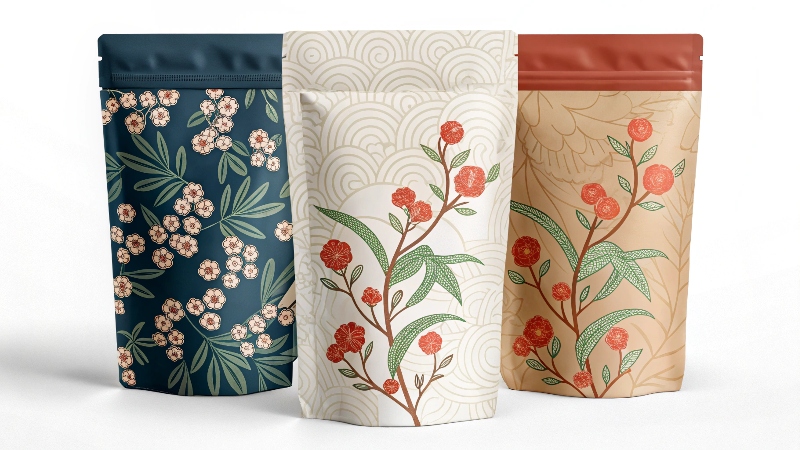
Minimum order quantity is one of the most important factors for a startup. Ordering too many pouches ties up your cash in inventory that just sits there. Ordering too few can be inefficient or impossible with certain printing methods. The key is to find a supplier that offers flexibility.
-
No MOQ with Digital Printing This is the most powerful option for startups. At Sorbar, our digital printing services have no MOQ. This allows you to order exactly what you need. Do you want to test 50 bags for a farmers market? You can do that. Need 500 bags for a limited-time seasonal product? You can do that too. This approach minimizes waste and frees up your capital for other essential parts of your business, like marketing or product development. It's the ultimate low-risk way to get professional packaging.
-
High MOQ with Rotogravure Printing Rotogravure printing is a different story. The high setup cost of the printing plates must be spread across a very large number of bags to make financial sense. That's why the MOQ is high, usually starting at 10,000 pieces and often going up to 100,000 or more, depending on the bag's size and complexity. This is not a good fit for a new business that is still validating its product. It's designed for large, established companies with predictable and high sales volumes for a single product design. For them, the extremely low per-unit cost at these volumes justifies the large order.
Understanding this difference is crucial. When you contact a packaging manufacturer, one of the first questions you should ask is about their MOQs for different printing technologies. This will immediately tell you if they are a good fit for your business stage.
Which Stand-Up Pouch Features Can You Eliminate to Significantly Lower Your Packaging Costs?
Want to lower your packaging costs? Adding every possible feature to your pouch looks great but can quickly inflate the price and make your packaging too expensive.
To significantly lower costs, focus on the essentials. You can often eliminate extras like spouts, intricate die-cut shapes, or matte finishing. Sticking to a standard pouch shape with a simple resealable zipper is the most cost-effective approach for most products.
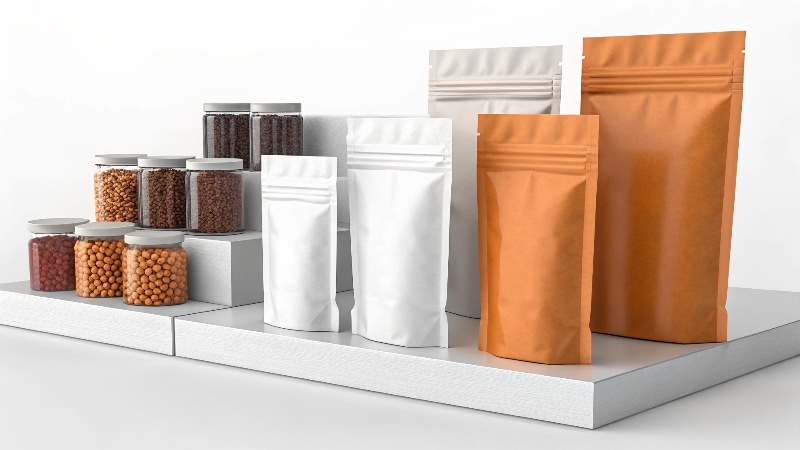
Every bell and whistle you add to your stand-up pouch adds to the final cost. While some features are essential for your product, others might just be "nice-to-haves." By carefully evaluating what you truly need, you can cut your costs without hurting your brand's image or the customer's experience.
Here’s a breakdown of common features and their impact on cost:
-
Essential Features (Usually Worth the Cost)
-
Resealable Zipper: This is a must-have for most food products. It keeps the product fresh and improves the customer's experience. A standard press-to-close zipper is very affordable.
-
Material Layers: The right barrier materials are crucial to protect your product from moisture, oxygen, and light. Skimping here can lead to spoiled products, so this is not the place to cut corners.
-
Optional Features (Consider Eliminating to Save Money)
-
Spouts and Fitments: These are great for liquids but add significant cost and complexity to manufacturing. If your product isn't a liquid or puree, you don't need one.
-
Special Finishes: A glossy finish is standard and a matte finish can add a premium feel, but it also adds to the cost. A combination of spot gloss and matte is even more expensive. Sticking with a standard glossy finish is the cheapest option.
-
Hang Holes and Tear Notches: A tear notch is a small convenience that adds very little cost. A hang hole is only necessary if you plan to display your product on peg hooks in retail stores. If you sell primarily online, you can skip it.
-
Custom Shapes (Die-Cutting): A standard pouch shape is the most economical. Creating a unique, custom shape requires a special die-cutting tool, which is an added one-time cost.
By challenging every feature, you can find the perfect balance. Ask yourself: "Does this feature add real value for my customer, or does it just look cool?" Often, a clean, simple design is just as effective as a complex one.
How Can Flexible MOQ Options Help Food Startups Reduce Upfront Investment in Stand-Up Pouch Packaging?
As a startup founder, is your cash flow tight? High upfront packaging costs can be a major barrier, preventing you from launching the products you've worked so hard on.
Flexible MOQ options, especially the "no MOQ" offered by digital printing, directly reduce your upfront investment4. Instead of paying for 10,000 bags you might not sell, you can order just a few hundred. This frees up thousands of dollars for marketing and growth.
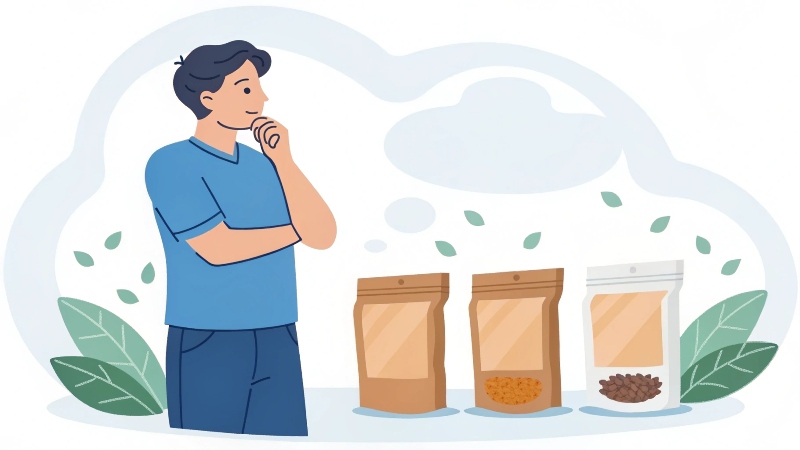
For a startup, cash is everything. Every dollar you spend needs to work hard for you. A huge upfront investment in packaging is a static cost—that money is literally sitting on a shelf in the form of bags. Flexible MOQs change this dynamic completely. They turn packaging from a large capital expense into a smaller, more manageable operational expense.
Let's go back to my candy client, Sarah. She needed packaging for 20 flavors. Here are two cost-saving strategies we gave her, both centered on flexibility:
-
The Digital Printing Solution: As we discussed, she chose digital printing. This meant she could order as few as 100 bags for each of her 20 flavors. Her initial investment was for just 2,000 bags in total, instead of the 200,000 bags she might have had to order with rotogravure (10,000 MOQ x 20 designs). This saved her tens of thousands of dollars.
-
The Universal Bag Solution: We also offered her another creative idea. She could design one beautiful, "universal" bag that featured her brand name and general candy information but left a blank space. This bag could be produced cheaply using rotogravure because it was a single large run. Then, for each of her 20 flavors, she could print simple, inexpensive labels and apply them to the universal bag. This way, she only needed one set of printing plates, saving her the massive $14,000 plate fee.
Both solutions achieve the same goal: they dramatically reduce the initial cash outlay. This allows a startup like Sarah's to be nimble. She can test which candy flavors sell best without being stuck with thousands of bags for an unpopular flavor. Her investment is lower, her risk is lower, and she has more money available to actually grow her business. Finding a packaging partner who understands this and offers flexible solutions is essential for any startup's success.
Conclusion
In short, reducing your custom pouch costs is about making smart, informed choices. By picking the right print method, simplifying features, and finding a partner with flexible MOQs, you can succeed.
Learn about various printing methods to choose the best one for your packaging needs. ↩
Find out when Rotogravure printing is the best choice for high-volume orders. ↩
Discover the advantages of digital printing for small businesses and startups. ↩
Find ways to minimize initial costs and maximize your budget. ↩
Written by

You may also be interested in:
How to custom mylar bags from China?
Struggling with the complexities of custom packaging1? A wrong choice can hurt your product's launch and quality. Let me guide you through creating the perfect Mylar bags from China. To
How Can You Reduce Your Packaging Bags Cost For New Brand?
Struggling with high packaging costs and risks for your new product? This one-size-fits-all approach can drain your startup capital before you even make a sale. But there's a smarter way.
Smart Savings: How to Reduce Costs When Customizing Stand-Up Pouches
Stand-up pouches (SUPs) have revolutionized product packaging thanks to their convenience, shelf appeal, and reduced material usage compared to rigid containers. They offer a fantastic canvas for branding and functionality.